

Our Foot Wellness Experts can help you to get to the bottom of your foot pain, and there are many common causes to consider. Heel spurs are just one of many foot conditions that can cause discomfort, and it can be helpful to understand why they occur and what can be done to relieve them.
Many people believe that heel spurs are the same as plantar fasciitis, but these are actually different conditions. Let’s take a look at what heel spurs are and how they differ from other conditions that may affect the feet. Remember that you can visit Foot Solutions for a foot assessment if you are concerned about pain or changes in your feet, and our experienced team will help you to find solutions that work for you.
What are Heel Spurs?
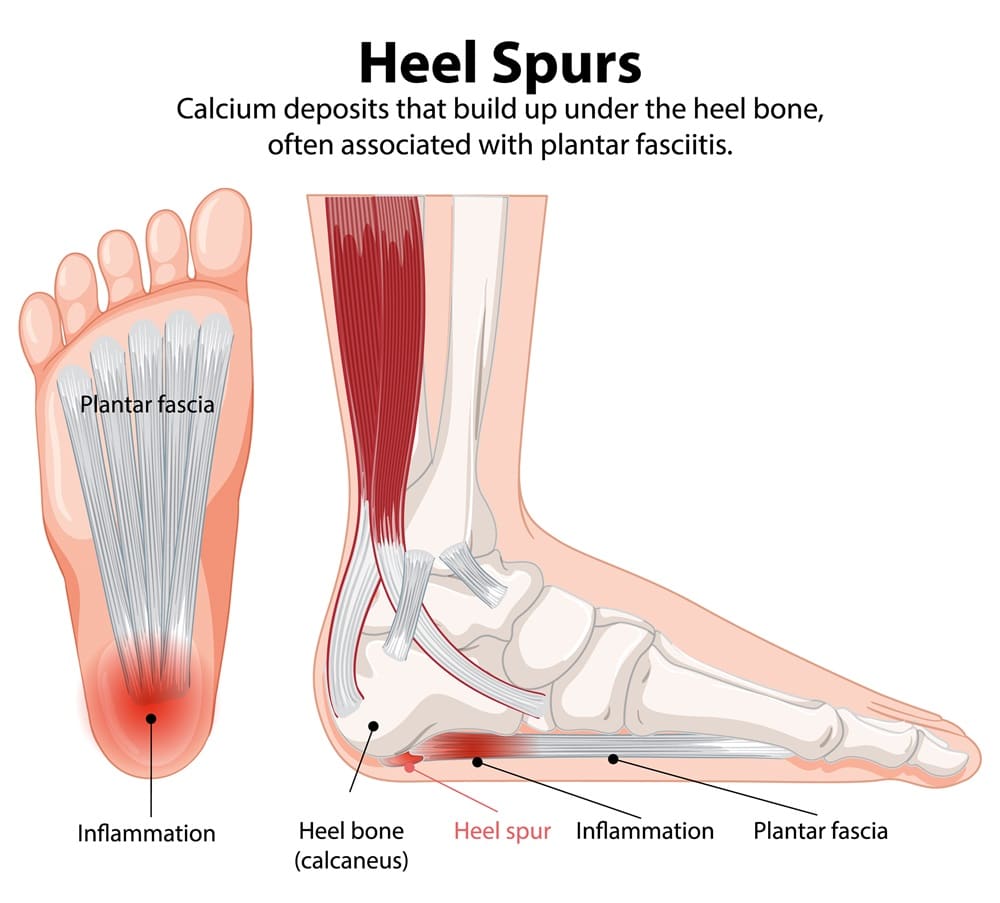
Heel spurs are bony growths that develop below the heel bone, where it connects to the ligament that runs from the heel to the ball of the foot. This is the plantar fascia ligament, which explains why many people confuse heel spurs with plantar fasciitis. When this ligament becomes inflamed, the body responds by building extra bone tissue that becomes a heel spur.
Heel spurs affect around 15% of people, and they tend to develop over time, with most people only noticing a protrusion when it has developed significantly. While they can follow on from plantar fasciitis, heel spurs are a separate condition.
What is Plantar Fasciitis?
Plantar fasciitis affects the plantar fascia, the ligament that runs from the heel bone to the ball of the foot. When this becomes torn or inflamed, usually as a result of overuse or stress, the pain can be intense and constant. Many people find that the pain eases on moving, but is particularly bad first thing in the morning.
If you are diagnosed with plantar fasciitis, you will need to rest the affected area before carrying out rehabilitation exercises to rebuild strength and promote healing. If it is not treated correctly, plantar fasciitis can become debilitating and can lead to other conditions, including heel spurs.
What Causes Heel Spurs?
When heel spurs develop, it is usually a response to extreme stress and strain that affects the tendons and ligaments of the feet. Heel spurs can also develop when you repeatedly tear the lining of the heel bone, and can be the result of a gait disorder that affects your balance and/or coordination.
Heel spurs may be diagnosed by X-rays, especially if they are in the initial stages of development. A foot examination can reveal heel spurs as hard, bony protrusions, and these can cause distress, although they are not usually painful.
How are Heel Spurs Treated?
Because heel spurs are often related to plantar fasciitis, the treatment for both conditions can be similar. There are several different options, including:
- Rest. Plantar fasciitis and heel spurs are often caused by the stress placed on the feet by running or jogging. Taking a break from your usual exercise regimen can help the plantar fascia ligament to recover, and this will be an essential step to prevent heel spurs from worsening.
- Ice. Ice treatment is helpful when you have any kind of foot pain, particularly if it is caused by inflammation. Icing the bottom of the foot regularly can help to ease the pain of plantar fasciitis and heel spurs.
- Anti-inflammatories. Anti-inflammatory medication can be helpful to reduce inflammation and pain in the feet, and may be helpful if you are experiencing a condition such as heel spurs.
- Custom-made orthotics. Custom-made orthotics are small devices that fit inside the shoes and are designed to support the unique contours of your feet. These can be very helpful in relieving the pain and pressure of heel spurs, re-aligning the feet to make it more comfortable to walk or run.
- Change your shoes. Footwear that supports the foot correctly can help you to relieve heel pain and cushion heel spurs that have already developed. At Foot Solutions, we have a good range of shoes for work, for leisure and for exercising, and we can help you to find the right options to accommodate the unique shape and size of your feet, as well as your foot conditions.
- Surgery. Surgery is the only option to actually remove a heel spur, as these are permanent. However, they are not normally painful, and surgery will usually only be offered in extreme cases or if you are having surgery for plantar fasciitis.
Can Heel Spurs be Reversed or Prevented?
Heel spurs, once developed, are permanent and cannot be reversed without surgery. However, the treatment options above can help to ease the pain, and you can talk to our Foot Wellness Experts or your doctor to find the best options for your own situation.
You can, however, reduce the risk of developing heel spurs by taking some simple measures. We recommend:
- Choose supportive shoes. Shoes that cushion your feet in all the right places can help to ensure adequate support for the tendons and ligaments, as well as the arches, bones and muscles of the feet. Many runners develop plantar fasciitis – and subsequently, heel spurs – because their shoes do not provide enough cushioning and the plantar fascia tendon comes under extreme pressure. Good shoes can alleviate this and reduce the risk of both conditions.
- Protect your feet. If you are walking around on hard floors, you are more likely to cause damage to the delicate tendons and ligaments in the feet. We often recommend wearing shoes or slippers inside your home to give your feet the additional support they need.
- Lifestyle adjustments. If you spend a great deal of time on your feet throughout the day, it can help to make changes to your lifestyle to reduce this. Taking breaks to put your feet up can improve your circulation and relieve the pressure on the joints, ligaments and tendons. If you are overweight, you may also find that losing weight as part of a healthy lifestyle reduces the pressure on your feet, and this can reduce foot pain and stress conditions.
- Choose softer surfaces. Making small alterations to the way you walk or run can make a big difference to the health of your feet. Walking in a way that puts less pressure on your heels can help you, and it is better for your feet if you choose to walk or run on softer surfaces like grass rather than hard surfaces like roadways and pavements.
Taking these measures can help to reduce the risk of developing foot conditions like heel spurs and plantar fasciitis, which are more likely to occur as you age. This is because the tissues in the feet become less flexible and are more prone to damage as the fat pads that cushion your feet become depleted over time. You may be at higher risk of heel spurs if you have high arches, and you can talk to our experienced team about this.
Find Supportive Shoes at Foot Solutions
Visit us at Foot Solutions to find comfortable, stylish shoes that will support your feet in your daily activities. If you are experiencing foot pain, we can help to find out why and discover the best solutions for you and your lifestyle. We offer services including gait analysis and custom-made orthotics, and we would love to book you in for a free foot assessment to find out more.


